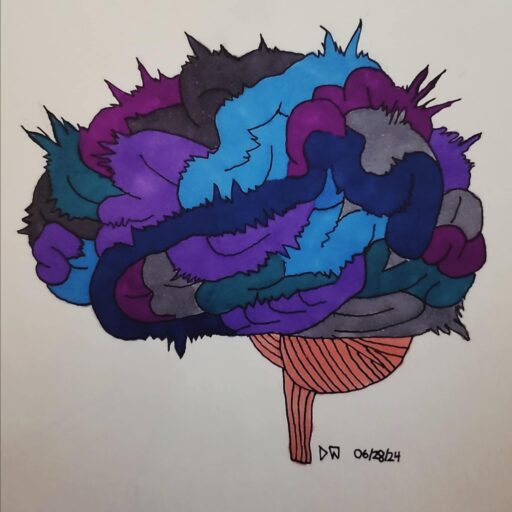
There are punishments that end when the sentence is served—and others that follow long after the gates swing open.
In Les Misérables, Victor Hugo makes this distinction painfully clear through Jean Valjean, a man legally freed but psychologically unmoored. Valjean’s release from prison does not deliver him into freedom; it delivers him into exile from himself. The chains are gone, yet the weight remains.
Hugo is not interested in whether justice has been done. He is interested in what punishment leaves behind.
Guilt as a Second Sentence
Jean Valjean enters the novel already fractured. Nineteen years of hard labor—for stealing bread to feed a starving child—have reshaped not only his body, but his sense of worth. When he is released, society does not meet him as a rehabilitated man, but as a threat.
He is refused shelter. He is denied food. He is reminded again and again that freedom does not mean belonging.
Hugo writes:
“He was no longer a man, he was a dog.”
(Les Misérables, Part One, Book Two, Chapter III)
This line is not metaphorical exaggeration—it is social diagnosis. Valjean has learned that his existence is conditional. His humanity is revocable.
Guilt, in this context, becomes internalized surveillance. Even before he breaks the law again, Valjean expects punishment. He anticipates rejection. He braces himself for violence.
The prison has trained him well.
Mercy as Psychological Shock
When Bishop Myriel welcomes Valjean—feeding him, sheltering him, calling him “brother”—the act does not heal Valjean immediately. It destabilizes him.
After Valjean steals the silver and is brought back by the police, the Bishop’s response is radical:
“So here you are! I am glad to see you. But I gave you the candlesticks too, which are of silver like the rest, and for which you can get two hundred francs.”
(Part One, Book Two, Chapter XII)
Mercy here is not gentle. It is violent in its own way. It shatters the internal logic Valjean has survived by.
Cruelty was predictable. Mercy is not.
Hugo understands that for those shaped by prolonged punishment, kindness can feel unsafe. It threatens the coherence of an identity built on shame. If Valjean is forgiven, then the story he has told himself—I am what they made me—no longer holds.
And that collapse is terrifying.
Identity After Incarceration
Valjean’s struggle is not whether to become good; it is whether he is allowed to be.
Even as he reinvents himself—becoming a factory owner, a mayor, a protector—he lives under constant vigilance. He fears discovery not because he intends harm, but because he expects consequence. Hugo shows us a man who has learned to survive by never fully resting.
Freedom, for Valjean, is not rest. It is responsibility layered with fear.
This reflects a deeper truth Hugo repeatedly returns to: identity is not erased by time served. The past does not dissolve simply because the law says it should.
The body may leave the cell.
The mind often does not.
Becoming Moral Without Self-Forgiveness
One of the most radical elements of Valjean’s arc is that his goodness does not stem from self-acceptance. It stems from obligation.
Valjean does not believe he deserves mercy—but he believes others do.
His moral life is outward-facing. He protects Fantine. He saves Cosette. He spares Javert. He carries guilt forward and reshapes it into care.
Hugo writes:
“He had learned that there is no weapon so powerful as goodness.”
(Part Two, Book Eight)
This goodness is not naive. It is disciplined. Hard-won. Heavy.
Valjean’s redemption is not a feeling—it is a practice.
Javert: When Guilt Has No Exit
If Valjean shows us how guilt can be carried and transformed, Javert shows us what happens when it cannot.
Javert’s identity depends entirely on certainty: law is law, crime is crime, order is moral. When Valjean spares him—when mercy violates his moral architecture—Javert cannot reconcile the contradiction.
Hugo describes Javert’s internal collapse:
“Javert was thrown into the most terrible doubt he had ever experienced.”
(Part Four, Book Twelve)
Unlike Valjean, Javert cannot live inside ambiguity. He cannot integrate mercy into his worldview. And without that integration, identity disintegrates.
Valjean survives because he learns to live with guilt.
Javert dies because he cannot live without certainty.
The Afterlife of Guilt
What makes Les Misérables endure is not its politics alone, but its psychological honesty.
Hugo understands that guilt does not vanish on command. It lingers in posture, in expectation, in silence. It shapes how people move through rooms, how they speak, how they imagine the future.
Some sentences end on paper.
Others continue in the nervous system.
Valjean’s story is not about erasing the past. It is about refusing to let the past dictate the shape of one’s humanity.
He does not forget who he was.
He simply refuses to let that knowledge destroy who he becomes.
Why This Story Still Matters
Les Misérables does not promise easy redemption. It does not claim healing is linear or complete. It offers something more honest: the possibility of living meaningfully in the presence of unresolved pain.
Hugo reminds us that freedom is not the absence of guilt—but the courage to choose responsibility, compassion, and dignity despite it.
And perhaps that is the novel’s quiet truth:
That some wounds never close—
but they do not have to write the ending.
Works Cited
Hugo, Victor. Les Misérables. 1862. Translated by Isabel F. Hapgood,
Project Gutenberg, 2008, www.gutenberg.org/ebooks/135.
Hugo, Victor. Les Misérables. Translated by Christine Donougher,
Penguin Classics, 2013.



Leave a Reply