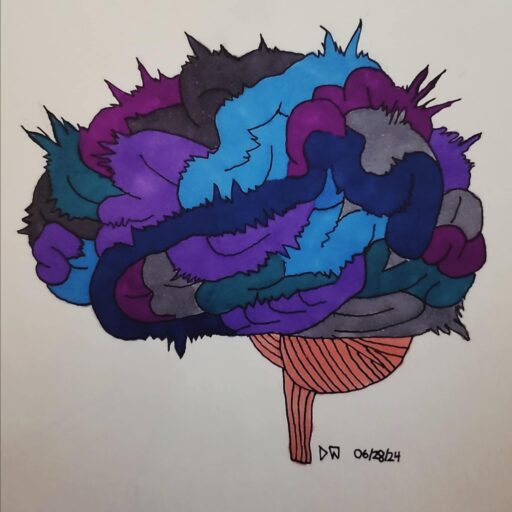

I’m loud in silence, fierce in thought,
My battles deep, yet outward naught.
In pages worn, I find my fire—
A whispered world, my lone empire.
Invisible to hunger’s gaze,
I drift through crowds in shadowed haze.
But though I bloom in rooms alone,
No soul can thrive in self-made stone.
My voice is wrapped in quiet threads,
It echoes loud in stories read.
I dance through monologues unheard,
Compose entire lives in words.
Yet even solitude runs thin—
What’s peace becomes a fragile skin.
And underneath, a softer truth:
Connection is the deeper proof.
To know myself, I must be seen,
Reflected clear in eyes serene.
Not for approval, loud applause,
But just to be—without a cause.
A single “stay” from one who hears
Can melt the frost of shadowed years.
We introverts may guard the flame,
But yearn for someone who knows our name.
So speak to me in steady tones,
Where silence doesn’t feel like stone.
No need for noise, just gentle space
Where I can bring my truest face.
I do not bloom in constant sound—
But still I need some solid ground.
For though alone I build my walls,
I grow when someone gently calls.
We’re not just quiet, we are vast—
A thousand storms behind a glass.
But in another’s gaze we find
The shape and mirror of the mind.
So while I love the world within,
My soul needs others to begin.
Not just dissolve—but break, expand—
To touch the light, to hold a hand.


Leave a Reply